Fibonacci Extensions Strategy
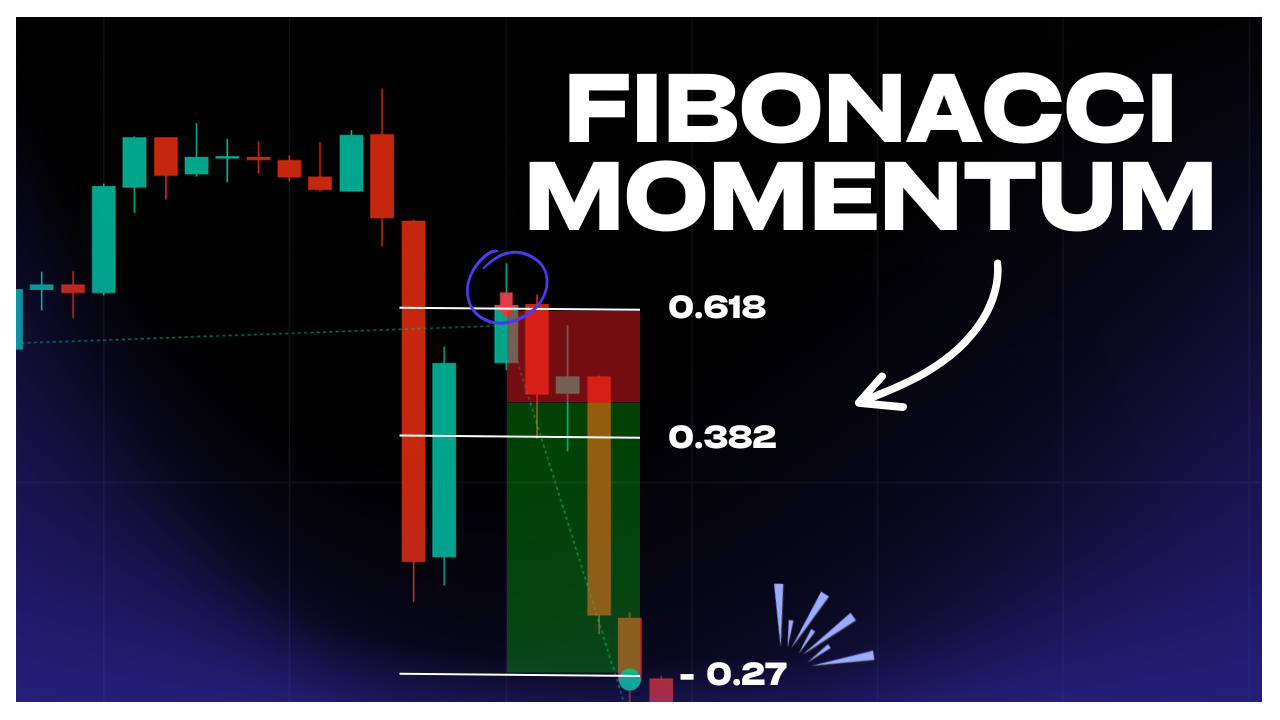
Adding the Fibonacci tool to your strategy becomes even more mechanical with Fibonacci extensions. Use Fib extensions to place logical and mechanical targets.
Fibonacci Extensions Strategy
We have already released 2 episodes on the Fibonacci tool, and this has been a great success. For this final episode, we are adding 1 more element to make your automated Fibonacci toolkit complete. This final element is the Fibonacci Extension.
Disclaimer: Templates are for educational purposes only!
👉 Get the Fibonacci Extension Automation Template → Fibonacci Extension Profectus Template
This template is designed to run on the 1H Timeframe.
You might also want to watch the full YouTube video on the Fibonacci Extension strategy here to get an in-depth explanation of the pattern.
Fibonacci recap
You can use the Fibonacci tool to identify strong moves and to find mechanical trading entries based on the Fibonacci ratios. The Fibonacci ratios represent percentages of the move that has been measured, to target where you would like to enter the trade.
Let’s look at an example. If you want to build a system based on trend continuations or breakouts, the Fibonacci method is a great way to find entries with a high risk-to-reward ratio. You let the system identify the move by using only 5 candlesticks. For a bullish move, the low of the most recent candle (candle ID 1) has to be higher than the low of 5 candles before that (candle ID 5). And vice versa for a bearish move.
The next step is to measure the strength of the move by comparing it with the current market volatility, using the ATR indicator. If the size of the move is bigger than the current market ATR over that same period, we can say that the move is impulsive.
In the final step, we measure the start and the end of the move and plot the Fibonacci levels as percentages of the move. The .618 Fib level is plotted at 61.8% of the move, meaning that price needs to pull back more than half of the move (61.8% to be exact) to reach the .618 Fib retracement level.
The Fibonacci Extension
The final element of the Fibonacci series is the addition of the extension. The extension is very simply an extension of the move, based on a percentage added. The Fibonacci extension is a popular method for identifying mechanical targets or take profit levels. In general, this is the beauty of the whole automated Fibonacci strategy. It gives you:
- Mechanical entry levels (the retracement levels, such as .618)
- Mechanical stop loss levels (deeper retracement levels such as .786 or the start of the move)
- Mechanical take profit levels (the extension levels, such as 1.27)
The Fibonacci extension is calculated by adding a percentage on top of the move, instead of taking a percentage as part of the move. The popular extension levels are 1.272 and 1.618.
It means that we’re multiplying the size of the move by those ratios to get the extension levels. For example, if the move is bullish and is measured between 1.1150 and 1.1200 (50 pips), the 1.272 extension level is located at 1.1214.
Fibonacci Extension Strategy rules
Let’s first look at an example of a trade from the Fibonacci Extension strategy.
.webp)
The rules for this trading strategy are the following:
- Start by measuring a strong impulsive move using the most recent 5 candlesticks. If the low of the previous candle (Candle ID 1) is lower than the low of 5 candles back (Candle ID 5), you have identified a bearish move.
- Save the low of Candle ID 5 as the high, save the low of Candle ID 1 as the low
- Calculate if the move is impulsive by comparing the distance between the high and the low against the current ATR value multiplied by 5. If the distance of the move is greater than the volatility threshold, we can say the move is impulsive
- Calculate the Fibonacci retracements of the move. Also, calculate the .272 extension by multiplying the distance of the move by 1.272 and adding this to the low of the move.
- If there are no open trades, place a buy pending order on the .618 Fibonacci retracement level, with a stop loss on the low of the move and a take profit at the .272 extension.
- If an order is not triggered, it will be automatically removed after 4 hours, and the system will look for new opportunities.
Automating Fibonacci Extensions in Profectus AI
.webp)
For this section, let me walk you through the system for sell trades only. The buy side logic has already been discussed in the previous episode which I have already linked to at the start of article.
- Initiate the variables. We start by putting the following variables in the Variables list. All are numbers and have a value of 0 by default:
high
low
highlow
highlowfib1
highlowfib2
highlowfib3
fib1
fib2
fib3
fib4
fibext
impulse
ATRmove
- Run per candle. We start the EA by checking all the rules once per candle
- Trade rule for identifying a bullish move. Put a trade rule block with the following rule:
Candle low, Candle ID 5 < Candle low, Candle ID 1
For continuing with the sell side of this strategy, we simply take the false output of this block and connect the next block to this false output. - Assign the move high and low to variables. Use 2 modify variable blocks to assign the high and low to the variables high and low.
high = Candle High, Candle ID 5
low = Candle Low, Candle ID 1 - Identify the Impulse using Formula block. We use 2 simple calculations for this
Impulse = high - low
ATRmove = Indicator Average True Range (period 14) * 5 - Calculating the Fibs using 2 formula blocks. Formula block 1:
Highlow = high - low
Highlowfib1 = highlow * 0.382Highlowfib2 = highlow * 0.618
Highlowfib3 = highlow * 0.786
Highlowfib4 = highlow * 0.27 - Confirm bullish move again. We run another check to see if the move was bearish or bullish to identify the next steps. Put a trade rule block with the following rule:
Candle low, Candle ID 5 < Candle low, Candle ID 1
For continuing with the sell side of this strategy, we simply take the false output of this block and connect the next block to this false output.
- Assign the Fibonacci Ratios. We use another formula block and connect this to the false output of the previous block. We put the following formulas in:
Fib1 = low + highlowfib1
Fib2 = low + highlowfib2
Fib3 = low + highlowfib3
Fibext = low - highlowfib4 - Check if no open trades. Count trades block with 0 orders and 0 open trades
- Confirm Impulsive Move. Trade rule block checking if:
Impulse > ATRmove - Sell pending order.
Open price: Custom price level, fib2
Stop loss: Custom price level, high
Take Profit: Custom price level, fibext
Expiration: 4 hours
Get Access to the Fibonacci Extension Strategy Template
Want to see how the Fibonacci Extension Strategy works when fully automated?
Access an enhanced automation template used to turn this trading concept into a deployable MQ5 trading bot inside Profectus. This template has a trade execution module included, so you can start testing it right away!
Disclaimer: Templates are for educational purposes only!
👉 Get the Fibonacci Extension Automation Template → Fibonacci Extension Profectus Template
This template is designed to run on the 1H Timeframe.
How to run the Strategy in Metatrader 5?
We have written a full article to get you started in Metatrader 5 and how you can run any automated strategy, such as the Fibonacci Retracement strategy, as an Expert Advisor yourself.
Read the full guide here to run your first trading bot in MT5
Other related blog posts
Dive into a world of knowledge, trends, and industry updates on the Variable blog. Our curated content covers a spectrum of topics.