ICT Breaker Blocks: How to Trade & Automate Breaker Blocks
Within the ICT trading methodology, Breaker Blocks represent a natural evolution of Order Blocks. Read how to create these ICT concepts in Profectus AI.
Why Breaker Blocks Matter in Automated Trading
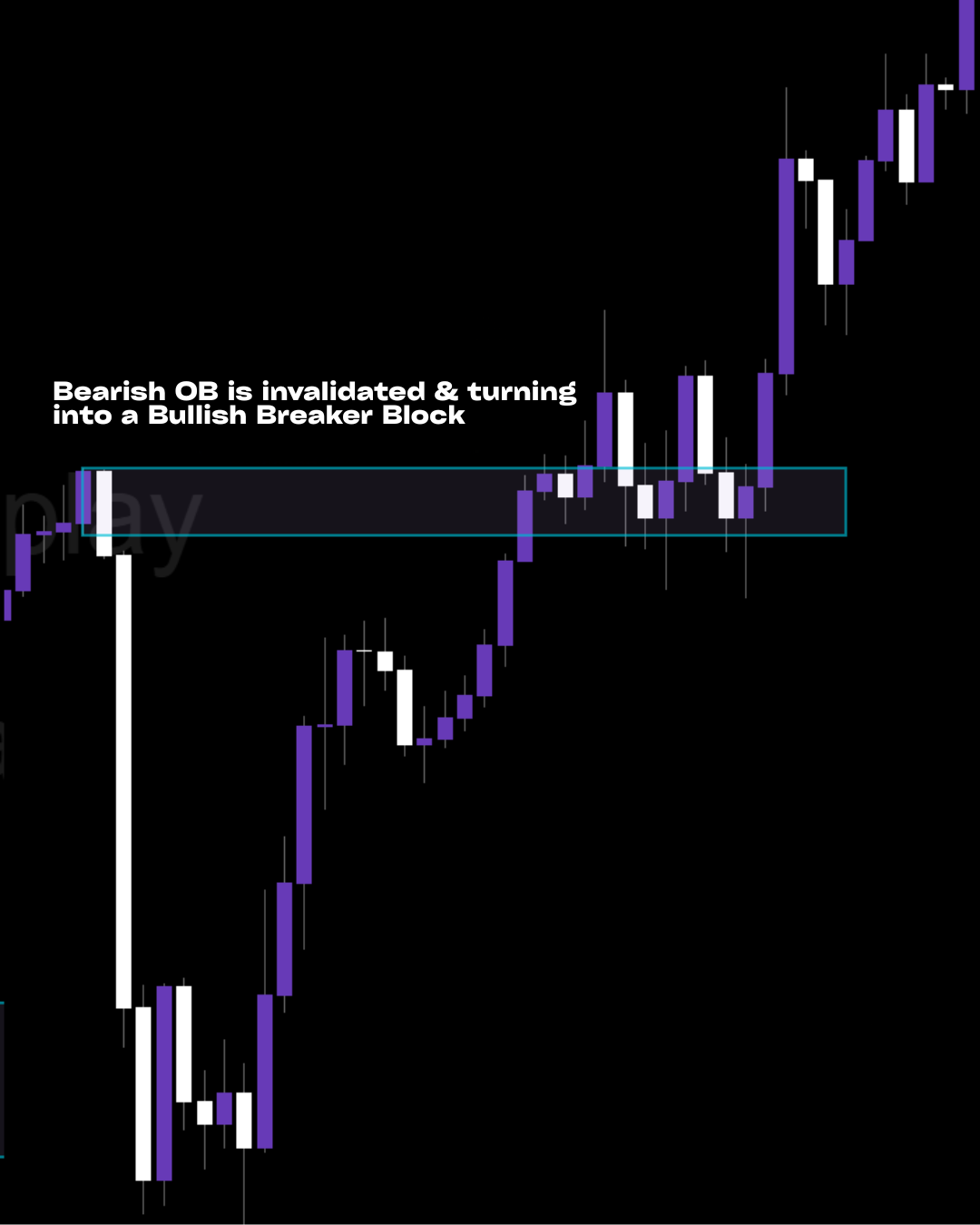
Within the ICT trading methodology, Breaker Blocks represent a natural evolution of Order Blocks. They emerge when a previously valid Order Block fails and flips its role in the market. Rather than acting as support or resistance, the zone becomes a signal of shifting order flow.
Many traders struggle with Breaker Blocks because they require an understanding of both continuation and failure. This makes them difficult to trade discretionarily — but extremely powerful when automated.
This is exactly why Breaker Blocks are perfectly suited for algorithmic trading and automated execution.
Since we focus on building automated trading systems for MetaTrader 5, we will refer to these systems as Expert Advisors (EAs).
If you want more context on the normal ICT Order Blocks, you can read the full article on OBs here
What is a Breaker Block (ICT definition)
A Breaker Block is a failed Order Block that has been violated by price and later acts as a reaction zone in the opposite direction. From an ICT perspective, Breaker Blocks represent a shift in institutional intent and a change in market regime.
In a bullish context, a bearish Order Block is broken to the upside and later acts as support. In a bearish context, a bullish Order Block is broken to the downside and later acts as resistance.
Breaker Blocks are significant because they often act as:
- Confirmation of order flow shift
- High-probability reaction zones after structure change
- Areas of re-entry following displacement
Structurally, a Breaker Block is identified by:
- A valid Order Block
- A decisive break with a candle closing through the Order Block
- Price returning to the broken Order Block
These characteristics make Breaker Blocks objective zones of interest rather than subjective trade entries. However, on lower timeframes, when stacked with other confluences, Order Blocks can be used to place trade orders directly.
How Do We Define a Valid Breaker Block?
To automate Breaker Blocks, each condition must be mechanical and clearly defined. For a bullish Breaker Block:
- Identify a valid bearish Order Block
- Price closes above the high of the Order Block
- The broken Order Block is stored as a Breaker Block
For a bearish Breaker Block, the logic is inverted.
Why Breaker Blocks Work (Institutional Logic)
Institutions constantly adjust their positioning based on liquidity, efficiency, and market response. When an Order Block fails, it signals that the original institutional intent has been absorbed or invalidated.
The market often revisits these failed zones because they represent unfinished business — making Breaker Blocks powerful reaction areas.
Automating Breaker Blocks Using Profectus AI
With Profectus, traders can transform the Breaker Blocks concept into a fully automated module without writing code.
Using Profectus, you can:
- Detect Order Blocks mechanically
- Monitor break conditions
- Convert Order Blocks into Breaker Blocks
- Apply consistent execution rules
This no-code trading approach allows traders to experiment, refine, and deploy institutional concepts in minutes.
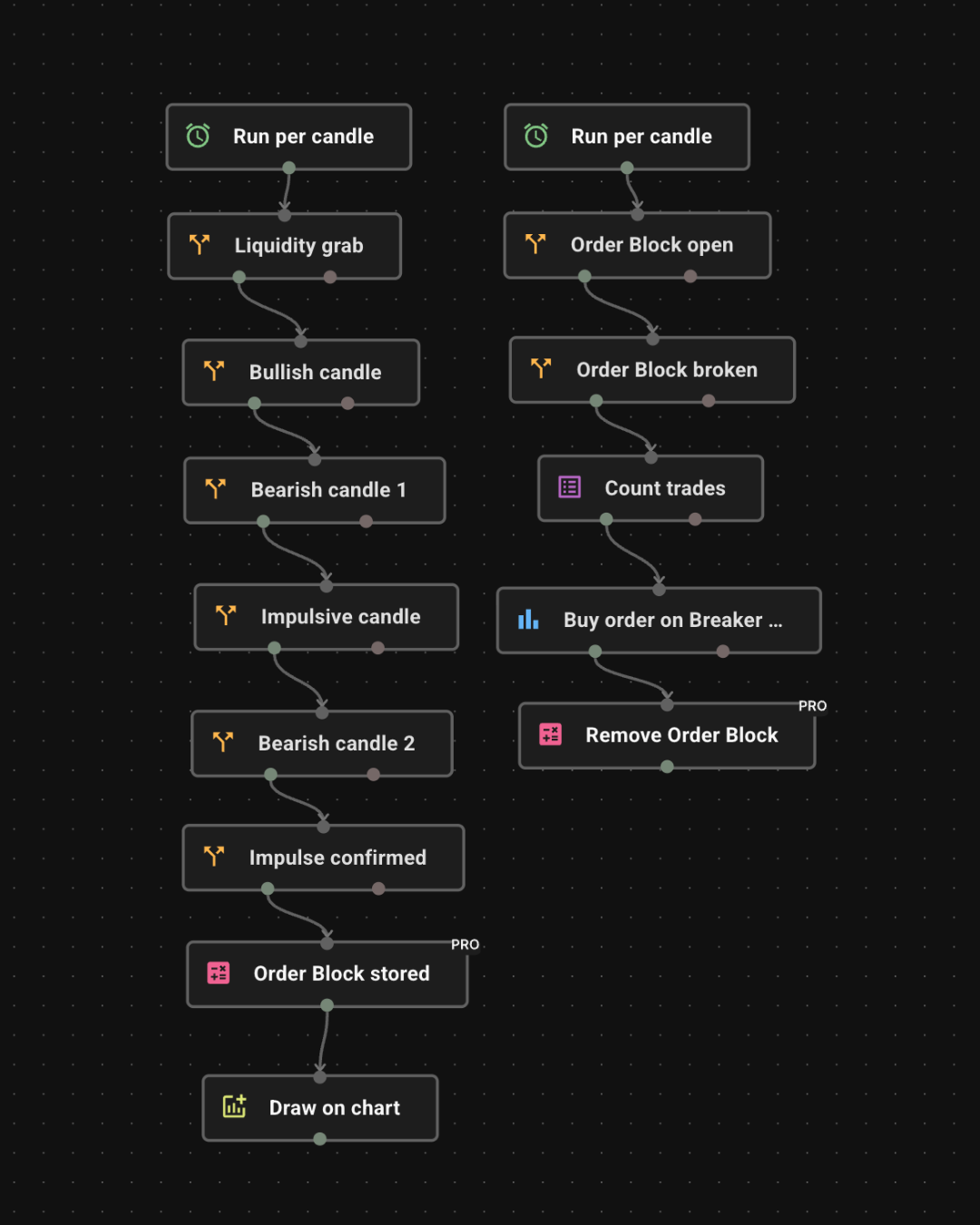
I named the blocks to make it easier for you to understand what we’re doing in each Profectus block. We can divide the creation of this no-code EA for Breaker Blocks into 3 steps.
- Run per candle block. Start with this block to make sure that every new candle that is formed on the chart, the EA runs through the whole process of finding an OB, again and again.
- Defining the OB using Trade Rule blocks. The 6 blocks that follow house the criteria for the OB. We already established that the OB is a 3-candle pattern with:
2.1. A liquidity grab
2.2. Candles 1 and 2 showing impulsive strength - Store the OB price levels. Once an OB is found, we store it in a variable so that we can use this variable later to identify if the price comes back to it.
- Define a break of the OB to turn it into a Breaker Block. A candle closing above the high of the Bearish OB invalidates it and turns it into a new area of interest as a Breaker Block.
And that’s it! It only takes a few minutes to drag-and-drop the blocks and build the Breaker Block module in Profectus. You can now add an execution module to start taking trades, or add more rules to refine the OB, or add more confluences to the strategy.
You can use the Order Block Module for your base and add the invalidation rule yourself.
👉 Get the Order Block Automation Template → ICT OB Profectus template
Deploying the Strategy as an MQ5 Bot on MetaTrader 5
Once automated, the Order Block strategy can be deployed as:
- An MQ5 trading bot
- Running 24/5 on MetaTrader 5
- Executing trades exactly as designed once you add buy/sell blocks and rules
Why MT5?
- Built-in algorithmic execution
- Broker compatibility
- Robust order handling
- Industry-standard platform for automated trading
This allows you to move from manual chart analysis to mechanical automated trading.
Can You Automate Other ICT Strategies?
Yes. In our blog library, you can find a selection of automated ICT concepts and strategies
If a strategy has:
- Clear rules
- Defined conditions
- Objective execution logic
It can be automated.
Order Blocks are just one example of how institutional trading concepts translate perfectly into algorithmic systems.
Get Access to the Breaker Block Automation Template
Want to see how this Breaker Block strategy works when fully automated?
Access an enhanced automation template used to turn this ICT concept into a deployable MQ5 trading bot inside Profectus. This template has a trade execution module included, so you can start testing it right away!
Disclaimer: Templates are for educational purposes only!
👉 Get the Breaker Block Automation Template → ICT Breaker Block Profectus template
Watch the Youtube Video here: Video Explainer on building ICT Breaker Blocks in Profectus
Other related blog posts
Dive into a world of knowledge, trends, and industry updates on the Variable blog. Our curated content covers a spectrum of topics.